

A radically different approach to impacting the world
The 2019 DAE Graduation Show
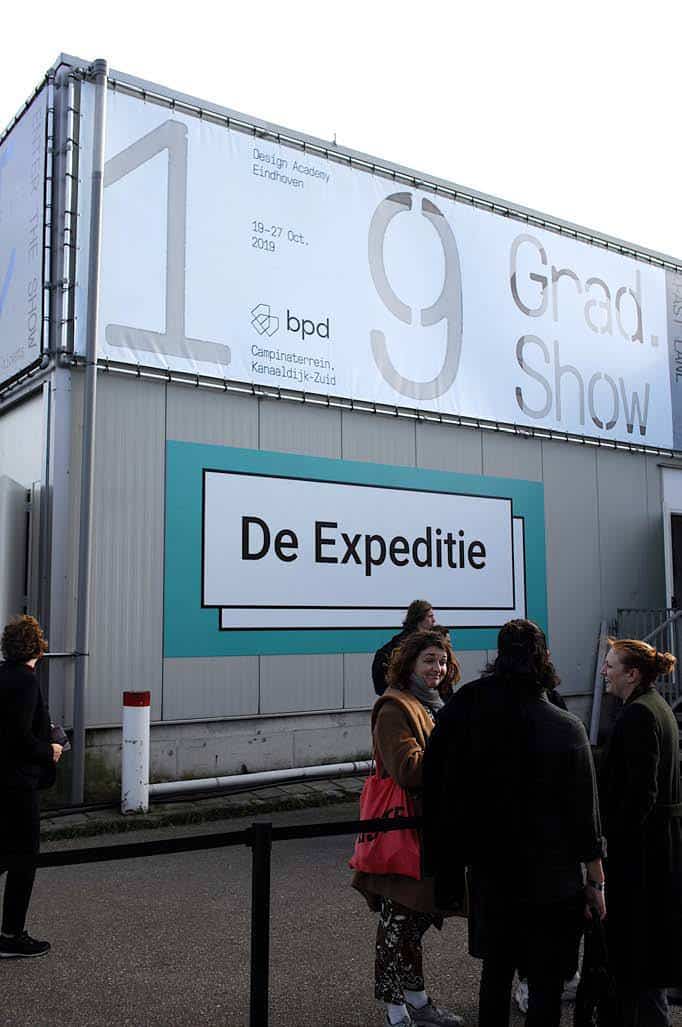
The Design Academy Eindhoven’s 2019 Graduation Show continued for its second year at the historic Campina milk factory, following last year’s successful move outside of De Witte Dame.
The Design Academy is known for its global relevance and influence into the broadest reaches of the design field. The Graduation Show, which takes place annually during Dutch Design Week, is a focal point in setting the school’s agenda. This year, the iconic factory setting becomes the background for yet another radical turning point in the show’s history. Traversing the boundaries between the four Master’s and eight Bachelor’s departments, a new curatorial strategy will continue to question and revisit how designers present their work, sparking debate about our collective positioning within the field.
Today’s designer faces two essential questions: how do you perceive the world around you, and what character do you play within that world? In response to this, the 2019 Design Academy Eindhoven graduation show sought to imagine design projects as elements of various possible futures. This year’s show was based on eight world-views and five design characters evoked by cross-department selections of bachelors’ or masters’ projects.
About Design Academy Eindhoven
To be effective, the DAE must think with the purposefulness of a designer on a planetary scale. A global perspective on design implies a global orientation for all our educational activities, using a conception of design that is total, embraces complexity, looks far into the future, and operates on a systemic level.
DAE has often been described as the birthplace of Dutch design. True or not, this claim has long passed its expiration date. Design today is a global phenomenon with an increasing urgency to reshape patterns of not only consumption, but of care, social organisation, future industries, living conditions and much more.
Graduate spotlight — Green Democracy by Matteo Viviano
An equal existence between humans and vegetation
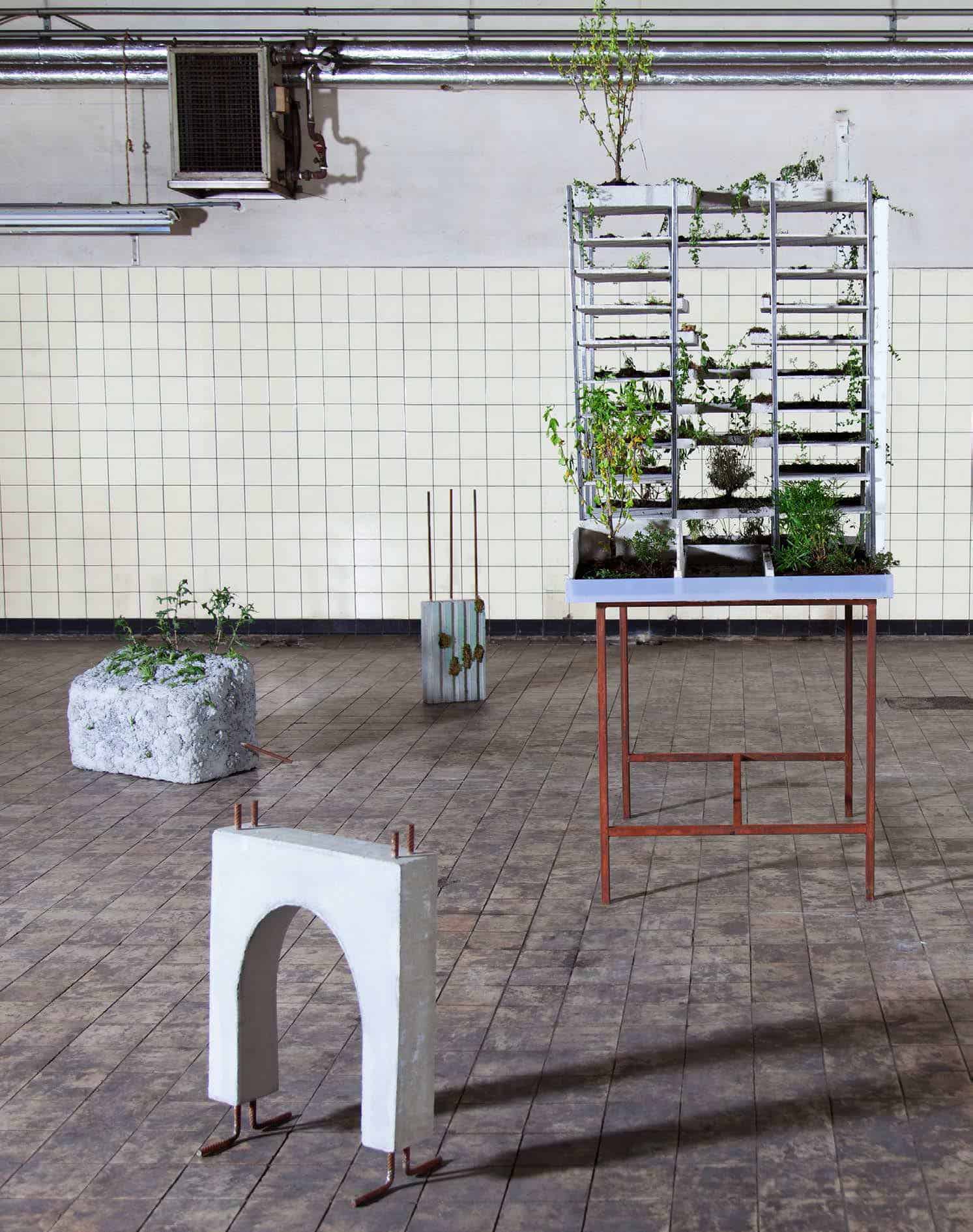 A new building system that helps architecture and nature to coexist. Once buildings are abandoned by man, nature reclaims and inhabits them, creating a blend of the human and wild. Inspired by this process, Matteo Viviano explores how to support greenery in our architecture. With increasing urban populations, it’s important to balance our needs and those of the ecosystem that we are a part of.
Matteo studied ancient ruins and abandoned buildings to see how nature takes hold. He collects this knowledge in a book, creating a series of ‘architectural fragments’ that nurture synergy with the natural world.
Says Matteo — “Nature can be a part of our urban space. Just make a step back for a step forward.”
Graduate spotlight — Māyā by Luiza Guidi Tomio
Experience light from a different perspective
 The Māyā pieces take a different view on lamps. By changing their position these frames allow you to play with light and shadow. Inspired by the geometric use of light by architects like Tadao Ando and Luís Barragan, these pieces present light in a graphic form and at the same time reinterpret the exciting feeling of opening a window to a new and brighter world.
Frames of steel with built-in led lighting are fixed to the wall on one side, so that their position can be changed as if you would open a window. The light switches on by opening the frame and the shape of the light cast on the wall changes as the frame is moved.
“I aimed for a magical experience with the simplest design” —Luiza Guidi Tomio
Graduate spotlight — Scraped Earth by Rino Claessens
Ceramics offer a more physical connection with the body
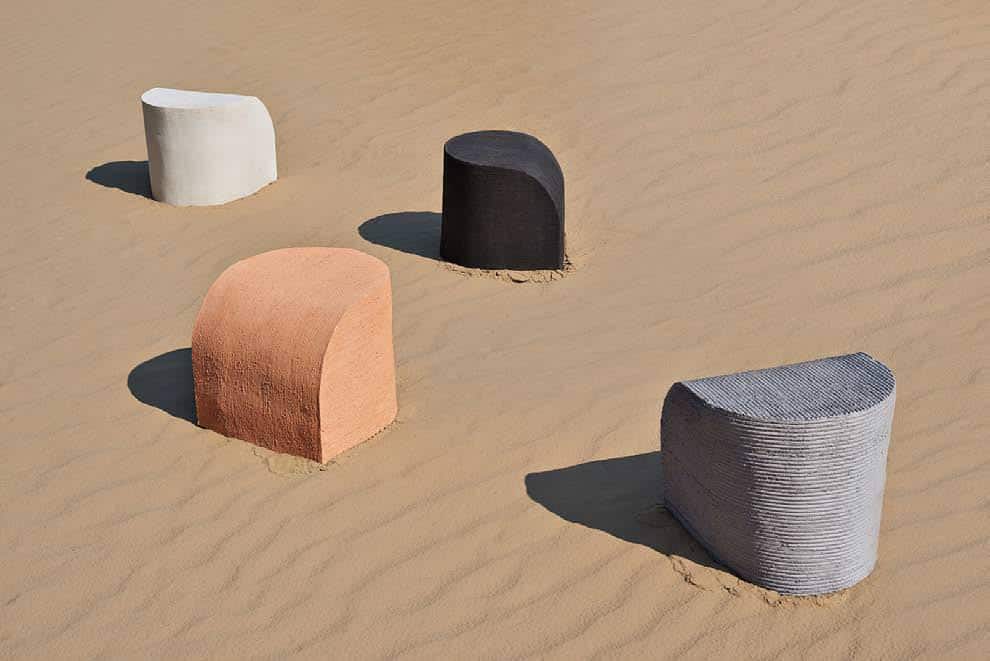
After researching how ceramics are produced, Rino Claessens concluded that the applications were limited to a certain size. He devised a way to increase the size of production and by that expand the limits of the material. His designs aim for a more physical connection with the body, offering a tactile experience of ceramics.
This resulted in five ceramic stoneware stools, in five textures and with five clay types, created using the designer’s own production method and tools. By reversing the usual technique of slip casting around and scraping clay over an inside mould instead of pouring onto an outside mould. Avoiding conventional techniques and inventing new tools, techniques and processes, Rino discovered a new world of possibilities. The texture that the tools leave in the clay emphasises the energy put into the making process, showing a less anonymous approach to reproduction.
Graduate spotlight — Tracing a Lifetime by Sunniva Rademacher Flesland
Studio Mend, focusing on extending the lifetime of our clothes
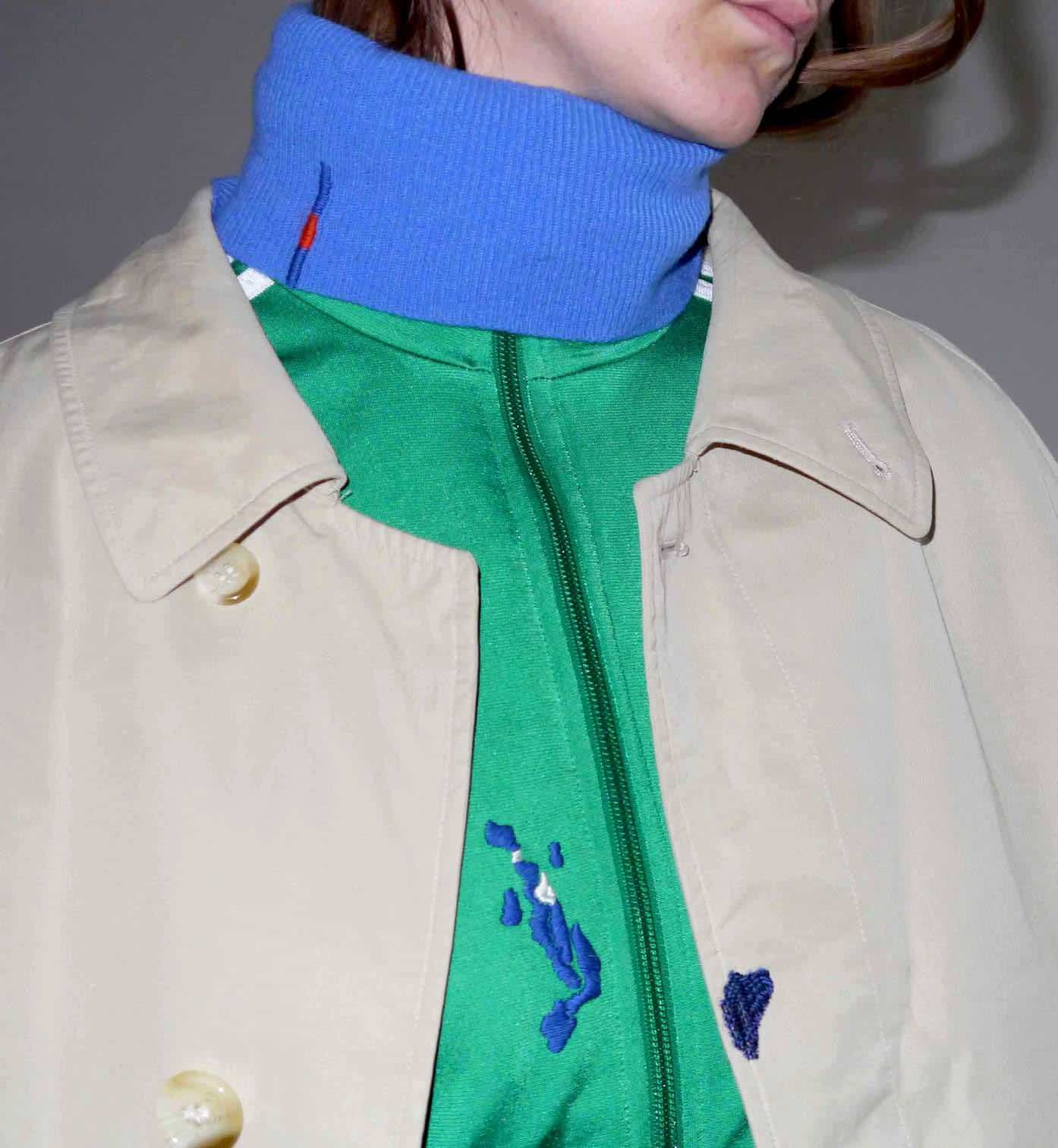 We met-up Sunniva while exhibiting at Dutch Design Week 2019. Here is what she had to say about her work.
I have created a clothing-collection made up by second hand, repaired garments of good quality, presenting an alternative to throwing away those garments which still have great potential to be used and valued. The repair will become an embroidery and a statement; a new aesthetic of repair based on traditional repairing techniques like darning.
In a culture of consuming faster then our clothes break, the purposely visible repair will be a sign that this is a piece of clothing worth repairing.
UPDATE: Studio Mend has since advanced from a graduation project and is currently located in Oslo, Norway, where Sunniva repairs garments on request and does project-based and conceptual repair work.