Creative Futures Conference 2026

Atlanta Design Festival is a platform to celebrate, convene, & connect creative industries. The festival invites the brightest creative leaders and organizations to host installations, exhibitions, design and architecture tours, film screenings, conference panels and more, to showcase Atlanta as a global powerhouse and innovator of ideas. Read More
Jump to section

Atlanta Design Festival relies on the dedication and enthusiasm of volunteers to help us deliver a seamless and memorable experience for thousands of visitors.
Creative Futures Conference 2026
Saturday, September 26, 2026
9:00 AM — 7:00 PM
About The Event
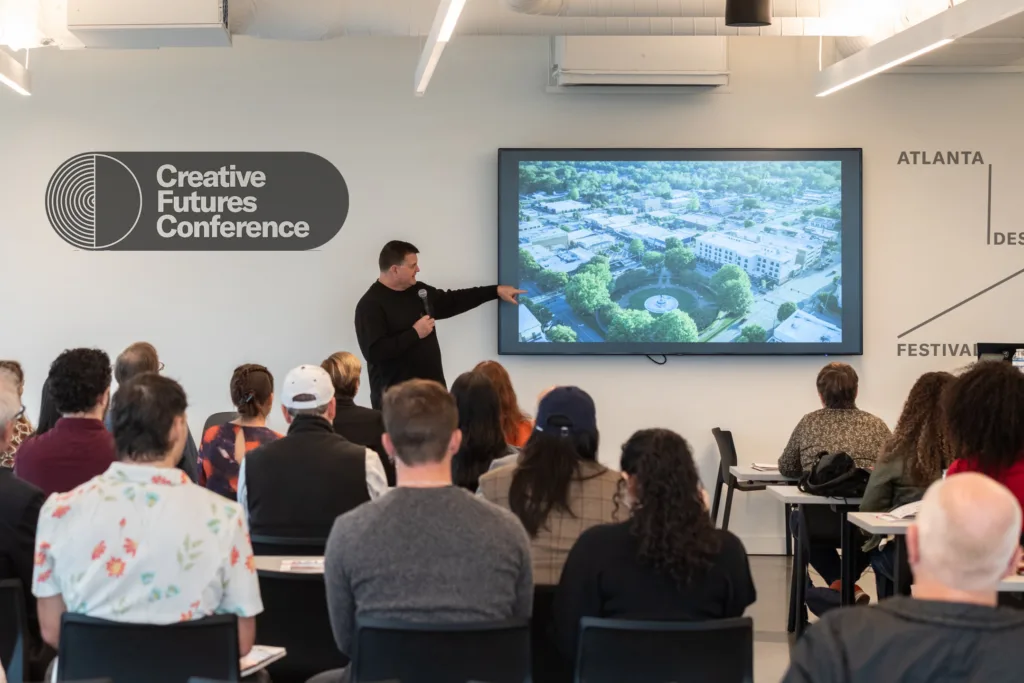
Now in its fourth year, Creative Futures Conference returns with a full‑day program uniting design‑minded leaders across business, non‑profit, academia, and the arts to explore how human‑centered design can guide meaningful transformation across business, environment, culture, and community—while thoughtfully engaging new technologies and emerging ways of thinking to expand what’s possible.
Whether you’re a creative professional, civic leader, student, or simply someone curious about how design shapes the world, Creative Futures Conference offers a space to connect, reflect, and imagine what’s next.

Tickets
Payment confirmed!
Your tickets have been emailed to you. Use the links below to view and print them.
Choose Your Ticket
Join the Waitlist
Your Details
Attendee Names (optional)
Add names for each ticket — useful for group bookings.
Payment
Buy Now, Pay Later
Spread the cost interest-free. You still get your tickets straight away.



You’ll finish on Stripe’s secure page. Options and terms depend on the provider and total.
Single Ticket (Early Bird)
Single Ticket (Full Price)
Group Ticket
Student Ticket
Accommodation
Scout Living
Scout Living is the official hospitality partner. Use the link below to get a reduced rate on your booking.
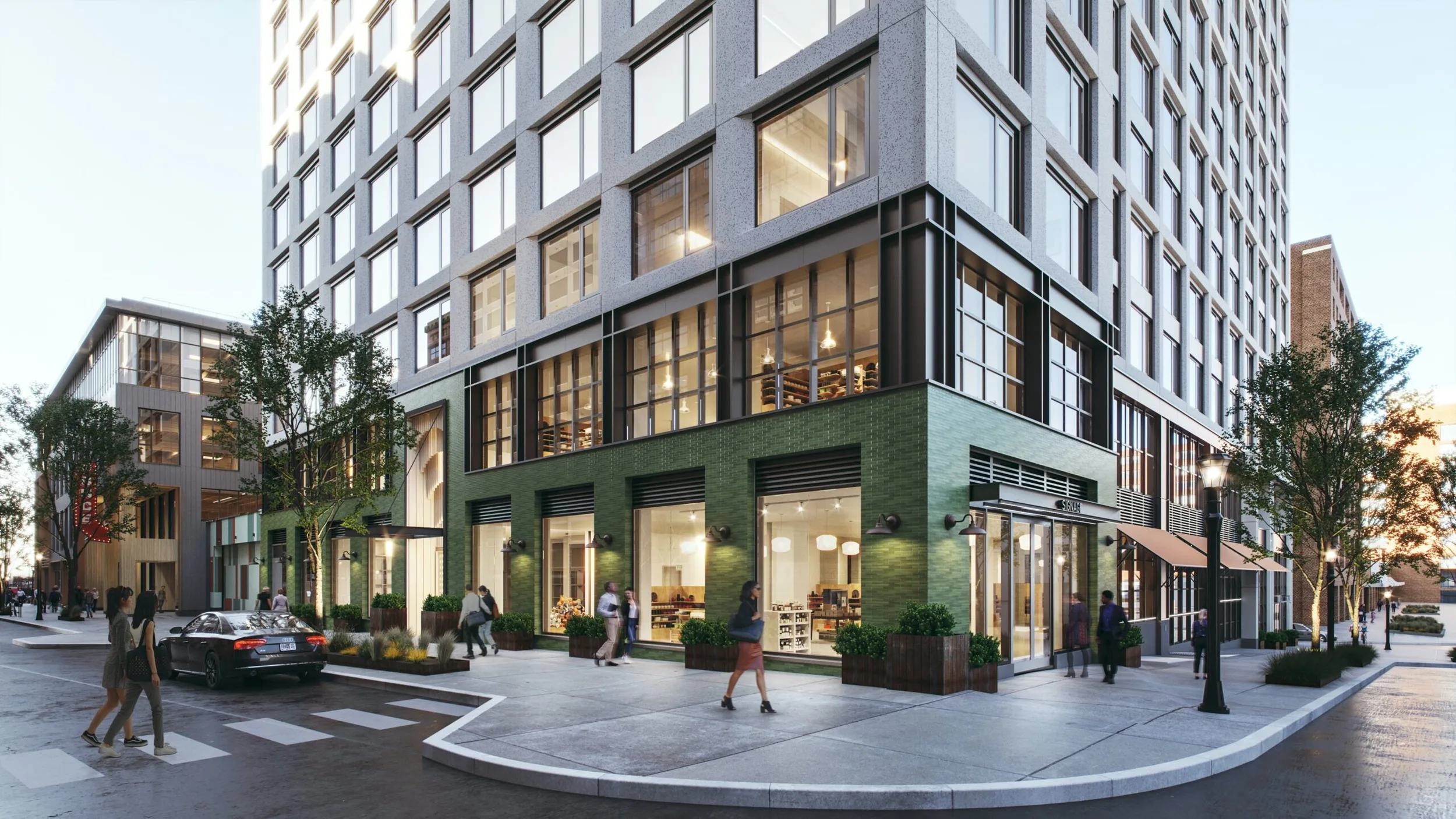
Integrated into Ponce City Market, Scout Living, powered by Placemakr offers fully-furnished units with all the conveniences to make you feel at home, whether you’re here for a few months or more than a year. Scout Livings unique micro-units feature fine-tuned, functional minimalism with galley kitchens and separate living and sleeping spaces for a comfortable, at home feel.
Each fully-furnished unit offers a kitchen stocked with cooking essentials, dishwasher, and a combo washer/dryer. Enjoy our rooftop with outdoor pool and 260-degree city views, wellness center, lounge spaces, and so much more.

Speakers









Schedule


Sekou Cooke presents his current work as an urban design consultant to cities pursuing socially just solutions to their legacies of harm and disrepair, framed within the context of his new book, Black Architect, published by Park Books. Signed copies will be available.
Sekou Cooke is an architect, urban designer, researcher and curator. Born in Jamaica and based in Charlotte, North Carolina, he is the former Director of the Master of Urban Design programme at UNC Charlotte, the 2021/2022 Nasir Jones Hip Hop Fellow at the Hutchins Center for African & African American Research at Harvard University, and a founding member of the Black Reconstruction Collective. His research centres on Hip-Hop Architecture, a theoretical movement reflecting the core tenets of hip-hop culture, aimed at creating meaningful impact on the built environment and giving voice to marginalised and underrepresented voices in design practice.
Book: Black Architect, University of Chicago Press (also available from other major booksellers)

Brands that shape culture do so through experiences built with intention and longevity. In this session, Samuel Baum shares how strategic brand activation can move beyond short-term engagement to create lasting cultural influence.
Baum will present how thoughtful programming can embed a brand within communities and creative ecosystems, drawing on his experience developing music, art and cultural initiatives. This informs his current approach at Assembly Studios Atlanta, where brand activation is treated as a long-term investment in narrative and place.
Aligned with the Atlanta Design Festival theme Make It Last, this session focuses on designing experiences that evolve, resonate and endure. Attendees will learn how brands can create cultural impact that remains meaningful long after the moment has passed.
Samuel Baum is Executive Director of Strategic Brand Activation at Assembly Studios Atlanta. His background includes work as a cultural curator for Red Bull and creating programming during Art Basel, developing music, art and cultural initiatives across brand and creative ecosystems.

Once shaped by an unnamed tributary feeding Tanyard Creek within the Peachtree Creek watershed, the Georgia Tech urban campus landscape is a dense entanglement of natural processes and institutional systems. The creek itself, once visible and formative, now persists as hidden water and sewer infrastructure — its natural ecological function suppressed, yet integral to the evolving campus above. Amid these latent, entrenched systemic relationships and the diminishing agency of architectural discipline and practice, how might design better foster social-ecological resiliency through limited means?
This lecture explores design as a tactical practice that opportunistically treats found conditions of infrastructure, land morphology, human and non-human inhabitation, hydrology, institutional evolution, and building convention as means for architectural intervention. Drawing on an interdisciplinary Art + Design Capstone Studio at Georgia Tech's School of Architecture, it surveys collaborative student research, experimental proposals for an Interpretive (de)Center, and other built work sited across Georgia Tech's extended campus, together challenging social-ecological interdependencies, cultivating new modes of ecological awareness and stewardship, and advancing forms of resiliency that anticipate change.
Bryce Truitt is an architect, educator, and researcher whose work explores intersections among social-ecology, art, and architectural production and practice. His research encompasses resilient housing and environmental infrastructure, architectural representation, constructional and material systems, and circular economies. As a lecturer, he teaches fundamental and advanced courses in architectural design, production, and representation, as well as integrated building systems. His professional work spans architecture, landscape architecture, and interactive media across residential and institutional scales.


Christophe Hutin, co‑designer of the landmark Transformation of 530 Dwellings in Bordeaux, France — a project widely regarded as one of the most influential architectural works of the 21st century and central to Anne Lacaton and Jean‑Philippe Vassal’s 2021 Pritzker Prize — will share the principles behind the “Never Demolish” movement and its global resonance.
He will also present the Beutre Project, a major new initiative in the Bordeaux region that reimagines a neighborhood originally built for migrant communities, including the Harki. Now shortlisted for the European Award for Social Housing, the project demonstrates how architecture can honor and strengthen an existing community’s history rather than erase it. Instead of razing and replacing, Beutre builds a renewed neighborhood on the foundations of lived experience — offering a model for lasting, human‑centered urban infrastructure.


Atlanta's "City in a Forest" identity is under pressure. Its once-dense tree canopy is declining faster than it is being replanted, especially in areas experiencing rapid development, while the city's growing housing demand calls for thoughtful densification and new construction.
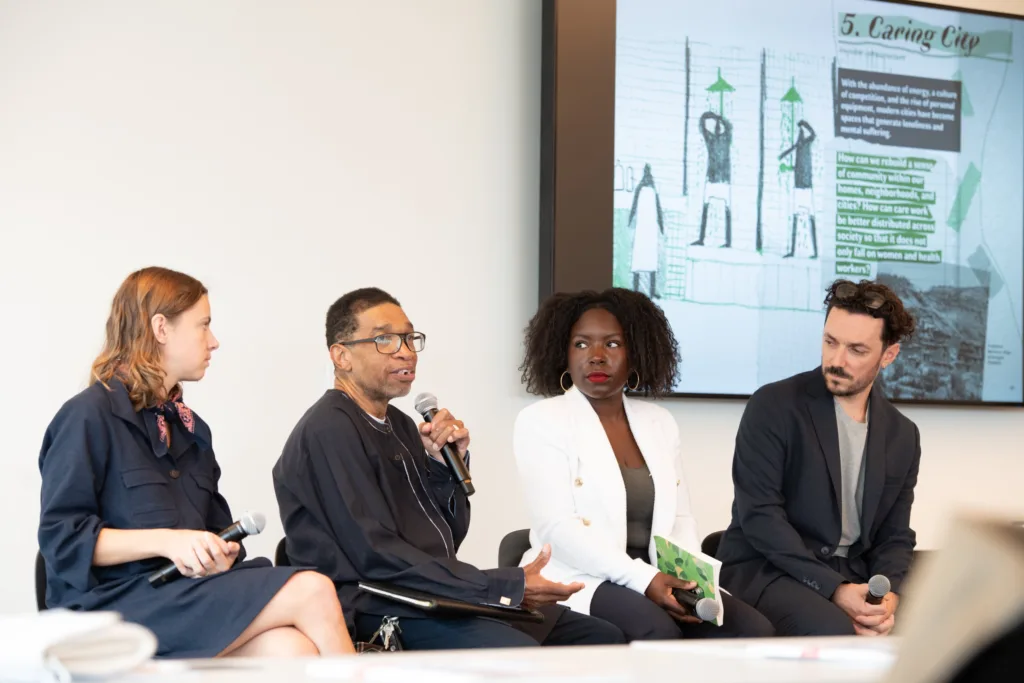
This panel invites designers, planners, civic leaders and the public to explore how to design a city around trees, not as scenery but as critical infrastructure that cools neighbourhoods, reduces stormwater runoff, improves air quality and supports mental health. It will also consider the human experience of trees: how people form emotional and cultural connections to them, how shade and greenery shape daily life, and how tree-filled environments influence a sense of belonging and wellbeing.
Virginie Kippelen is a French-American photographer based in Atlanta, Georgia, born and educated in France. She moved to the United States in 1991 to complete an MA in journalism (University of Arizona, 1993). Her work is driven by a desire to amplify voices for change, rooted in the belief that the current climate crisis and underlying environmental issues require a behavioural and cultural shift.
James Schroeder has worked in the entertainment business for over 20 years, with clients including The Home Depot, The Coca-Cola Company, Ford, Walmart, Cox and the PGA Tour Superstore. He started at Turner Studios in the editorial department and has since expanded into directing, writing, cinematography, sound recording and motion graphics, working across formats from thirty-second spots to documentaries and long-form narratives. He graduated from Georgia State University with a bachelor's degree in Film/Video Production and lives in Atlanta with his wife, daughter and their dog, Archie.
Atlanta is known as the City in the Forest. With nearly 47% tree canopy coverage, it has the largest urban forest of any major city in North America — a defining characteristic that shapes the city’s character, its neighborhoods, and its quality of life.
But Atlanta is losing its trees at an unprecedented rate.
The Tree Economy is a documentary by filmmaker James Schroeder that examines the forces driving that loss: development pressure, economics, and politics. Through the voices of tree activists, arborists, urban designers, elected officials, and developers, Schroeder maps a city at a crossroads — one facing a fundamental question about what kind of place it wants to be as it continues to grow.
The screening is followed by a drinks reception, giving attendees the chance to continue the conversation. Can Atlanta hold on to what makes it unlike any other American city? The film doesn’t shy away from the complexity of that question.
Trailer: The Tree Economy (Vimeo)
Film site: treedocatl.com
Past Speakers





































Managing Director, Startup Runway Foundation